

Theater entertainment isn’t limited to drama, musicals, and opera. Some productions push into spectacle-driven formats that involve vehicles as central stage elements, think stunt shows, immersive experiences, or theatrical adaptations that recreate car chases and racing scenes. When vehicles become part of a live performance, keeping them presentable becomes as important as any costume or set piece. This is where detailing webshop products enter the picture.
Vehicles as Props in Live Entertainment
Automotive-themed shows, stunt exhibitions, and even some experimental theater productions bring real vehicles onto the stage. Unlike a painted backdrop or a foam prop, a real car under stage lighting reveals every scratch, smudge, and dull patch of paint.
Audiences sitting close to the stage notice these details, especially when spotlights are angled to highlight the vehicle as a focal point. Maintaining a polished, well-detailed vehicle becomes part of the production’s overall visual storytelling.
Set designers who incorporate vehicles often treat them with the same reverence given to a lead actor. Placement matters, lighting angles matter, and so does the vehicle’s condition in every scene it appears in. A single dull panel or smudged windshield can break the illusion a production has worked hard to build, especially in scenes meant to convey glamour, speed, or high stakes.
This is why many productions bring in dedicated crew members whose sole responsibility is vehicle presentation, separate from the technical staff handling engines or mechanical function.
Why Detailing Products matter for Stage-Ready Vehicles?
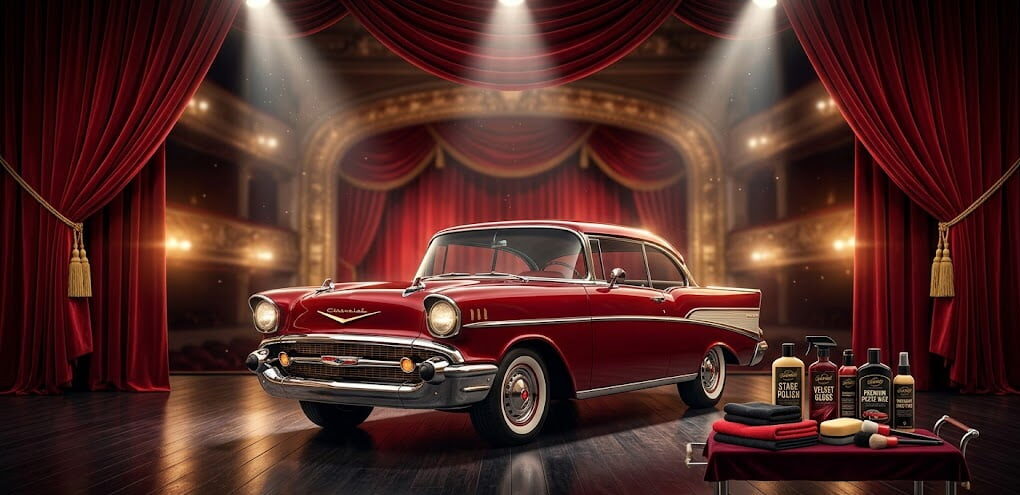
Automotive detailing products such as waxes, polishes, interior cleaners, and microfiber tools, exist to bring a vehicle’s finish to a near-flawless state. For a vehicle appearing under stage lights, these products serve a similar purpose to what stage makeup does for actors: they smooth out imperfections and make the subject camera- and audience-ready. Dust, fingerprints, and dull paint can be distracting under bright lighting rigs, pulling attention away from the performance itself.
A clean, glossy car reflects stage lighting in ways that enhance dramatic effect, particularly in scenes designed to evoke speed, luxury, or tension.
Lighting design also interacts directly with detailing quality. Stage lighting technicians often adjust rigs based on how a vehicle’s surface reflects light, and a freshly polished finish can be used deliberately to create shimmer or glare effects during dramatic reveals. Poorly maintained paint, by contrast, absorbs light unevenly and can flatten what should be a striking visual moment.
Backstage Maintenance Routines for Vehicle-Based Shows
Productions that feature vehicles repeatedly across multiple show dates need a maintenance routine, much like costume upkeep between performances. This often includes:
- Wiping down exterior surfaces before each show to remove dust accumulated during storage or transport
- Reapplying protective wax or sealant periodically to maintain shine under repeated stage lighting exposure
- Cleaning interior surfaces if actors or stagehands interact with the vehicle’s cabin
- Inspecting tires and wheels for scuffs, especially if the vehicle is moved on and off stage frequently
- Checking for touch-up needs on high-visibility panels that face the audience directly
This routine mirrors the discipline stage crews apply to costumes and props, reinforcing that vehicle upkeep is simply another category of production maintenance, not something separate from the theatrical process. Some larger productions even schedule detailing sessions the same way they schedule costume fittings, treating it as a non-negotiable part of pre-show preparation rather than an occasional touch-up.
Merchandising Opportunities for Automotive-Themed Productions
Theaters that host automotive-themed spectacles or partner with car-related brands sometimes extend the experience into their gift shops or online stores. Detailing products, branded polishes, or car-care kits can serve as tie-in merchandise for audiences who enjoyed a vehicle-centric show. This crossover appeals particularly to audiences who attend stunt exhibitions or racing-themed entertainment, where enthusiasm for the vehicles themselves runs alongside enthusiasm for the performance.
Offering such products also opens sponsorship possibilities. Automotive detailing brands may see value in aligning with a production that showcases their products’ effectiveness in a visually demanding, high-stakes setting, a stage under bright lights, viewed up close by hundreds of people per show. These partnerships can extend beyond merchandise into program advertising, lobby displays, or even live demonstrations during intermission, giving sponsors direct exposure to an audience already primed to appreciate vehicle aesthetics.
Bringing the Two Worlds Together
At first glance, automotive detailing products and theater entertainment seem like unrelated categories. But in productions where vehicles play a starring role, detailing becomes a quiet but essential part of the theatrical process. It ensures that every prop, including a two-ton one with an engine, meets the same visual standard as the actors’ costumes and the set design around it.
For theaters that regularly stage automotive-themed spectacles, treating vehicle detailing as a core production task, not an afterthought, helps preserve the polish and professionalism audiences expect from live entertainment, while also opening doors to merchandising and sponsorship opportunities that extend the show’s impact beyond the stage itself.
